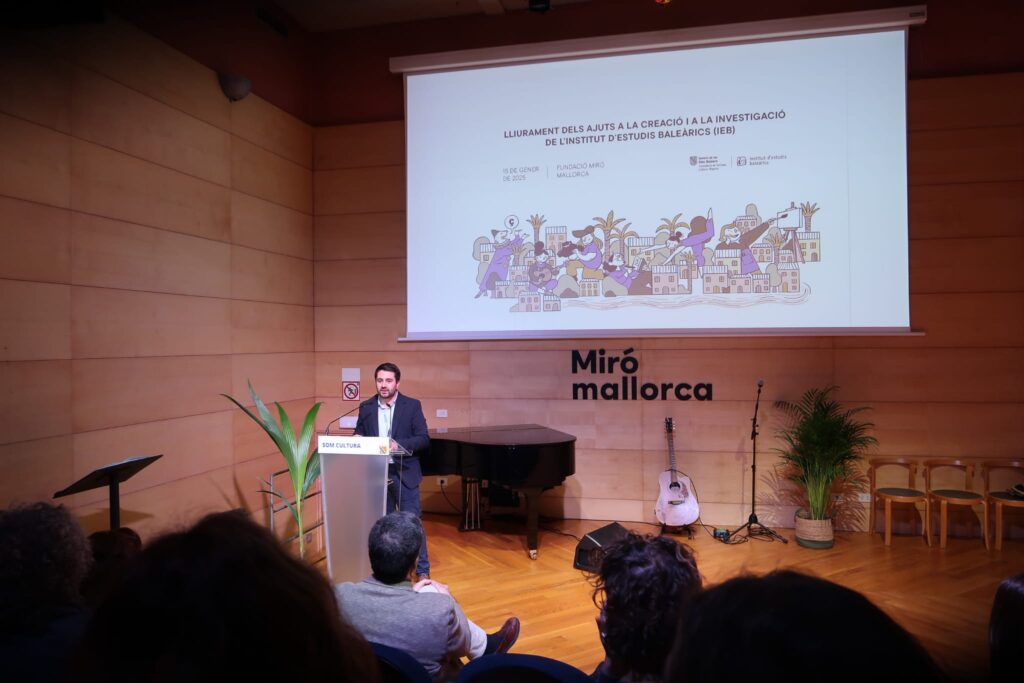
“Inventory and study of the musical archive of the county of Torre-saura (Ciutadella de Menorca).” This is the title of the work by musicologist Laura Triay, which was presented on Wednesday in the auditorium of the Fundación Miró Mallorca during the ceremony to award grants for creation and research by the Institut d’Estudis Baleàrics.
It is one of the most outstanding projects in the government’s call for grants for the cultural sector. It collects and highlights the county’s documentary collection and its importance in the history of Menorca and its society, in this case through music. Its recovery has been made possible thanks to The Fundación José María de Olives y de Ponsich, Conde de Torre-saura, which has collaborated with the author of the research work and allowed her to delve into its archives, documents, and scores.
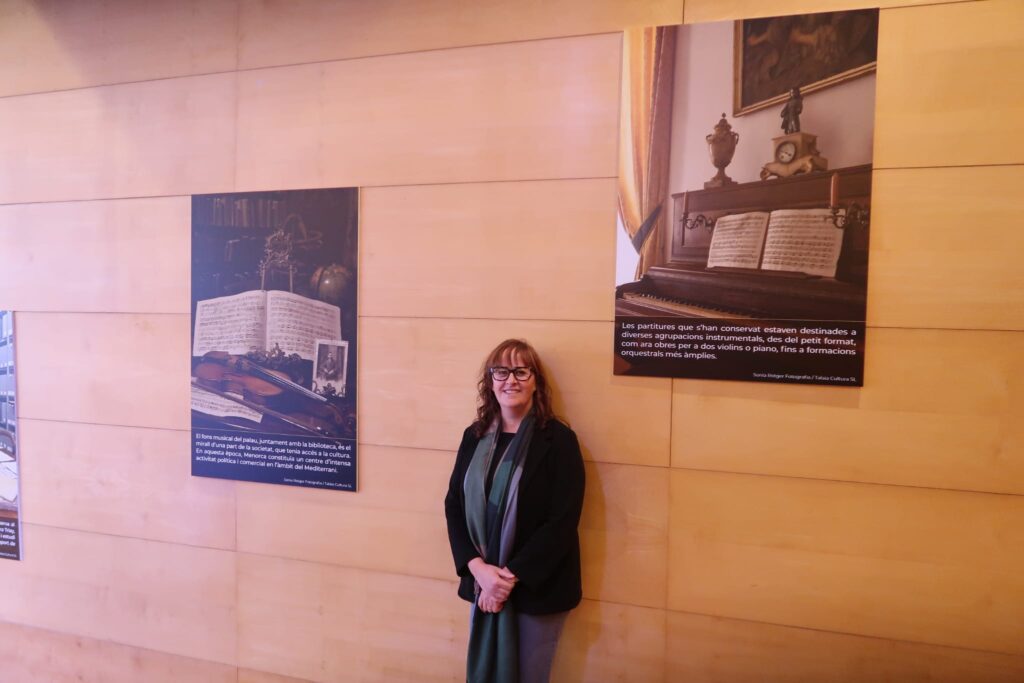
Menorcan-born Laura Triay presented her work in the form of visual panels that reflect the importance of the documentary collection studied. Artistic photographs of the musical collection and the Torre-saura palace were taken by Sonia Rotger, photographer at Talaia Cultura SL. She was accompanied by Antoni Camps, technician and head of the Torre-saura county historical archive, and Ruth Orbezo and Paqui Pérez, representing Fastfor SA and the Fundación José María de Olives y de Ponsich, Conde de Torre-saura.
This is the first time that the Institut d’Estudis Baleàrics has publicly announced the awarding of these grants, which represent an investment of €690.000 in 2024, although they correspond to the 2023 call for applications. The event was attended by the manager of the Institut d’Estudis Baleàrics, Llorenç Perelló, and the Minister of Tourism, Culture, and Sports, Jaume Bauzà.
About the study
The study includes a total of 230 documentary files, of which 135 correspond to copies of handwritten scores, 3 to autograph manuscripts, and 87 to printed scores. Of these, 60 are anonymous works, 21 are anonymous works with verified attribution, and the remaining 147 scores are works by known authors. The musical collection studied ranges from the oldest work dated 1735 to a printed score from 1905.
The conclusions
The study concludes that the music from the Torre-saura palace is mainly chamber music and dance music. These two genres reflect the social gatherings and parties of the local aristocracy. The preserved scores, ranging from small instrumental ensembles, such as works for two violins or piano, to larger orchestral formations, reflect the cultural activity of the Menorcan elites during the 18th and 19th centuries.
Furthermore, the study of this collection has revealed that, during the 18th century and until the first half of the 19th century, Menorca occupied a privileged position in the reception of musical and fashion influences in Europe. The musical collection, together with the library, is therefore a reflection of a society that had access to culture. At this time, Menorca was a center of intense political and commercial activity in the Mediterranean.
In short, the musical collection of the Torre-saura county archive is not only a heritage treasure, but also an invaluable source for the study of musicology, allowing for a deeper understanding of the civil music that resonated in Menorca during the 18th and 19th centuries.