Between the months of February and March, the course “The Ethnological Heritage of the Menorcan Countryside” took place. A training program organized by the Consell Insular de Menorca (Menorcan Island Council) as part of the 2026 Continuing Education Plan, which was held in collaboration with the Fundación José María de Olives y de Ponsich, Conde de Torre-saura.
The course was especially aimed at technical staff from the Historical Heritage Service of the Departament de Cultura, Educació, Joventut i Esports (Department of Culture, Education, Youth, and Sports), and from the Agència Menorca Reserva de Biosfera (Menorcan Biosphere Reserve Agency) of the Departament de Medi Ambient, Reserva de Biosfera i Cooperació (Environmental Department, Biosphere Reserve, and Cooperation) of the Consell Insular de Menorca, as well as other professionals in the public sector who typically work in rural areas, such as the Environmental Agents (AMAS) of the Govern de les Illes Balears (Government of the Balearic Islands) or the Servicio de Protección de la Naturaleza-SEPRONA (Nature Protection Service) of the Police body Guardia Civil, which is part of the Spanish Ministry.
The main objective has been to strengthen technical knowledge and coordination between administrations in the field of heritage protection, by training participants to identify, classify, and diagnose the immovable ethnological heritage of rural Menorca. Special attention was paid to architectural and hydraulic complexes, as well as to assets linked to the trades traditionally practiced in the countryside —farming, horticulture, walling, quarrying, charcoal making, or lime kilning. This knowledge base is key for ensuring proper management, better protection of the rural environment, and consistent decision-making regarding potential interventions or incidents in the territory.
The course, with about thirty registrants, lasted 12 hours over three days. The first session, theoretical in nature, was held at the Can Victori building, home of the Institut Menorquí d’Estudis (Menorcan Institute of Studies), and was led by Antonio Camps Extremera, a historian and historical heritage technician of the Torre-saura Foundation, as well as Jesús Cardona, an architect specialized in sustainability, rehabilitation, territory, and landscape.
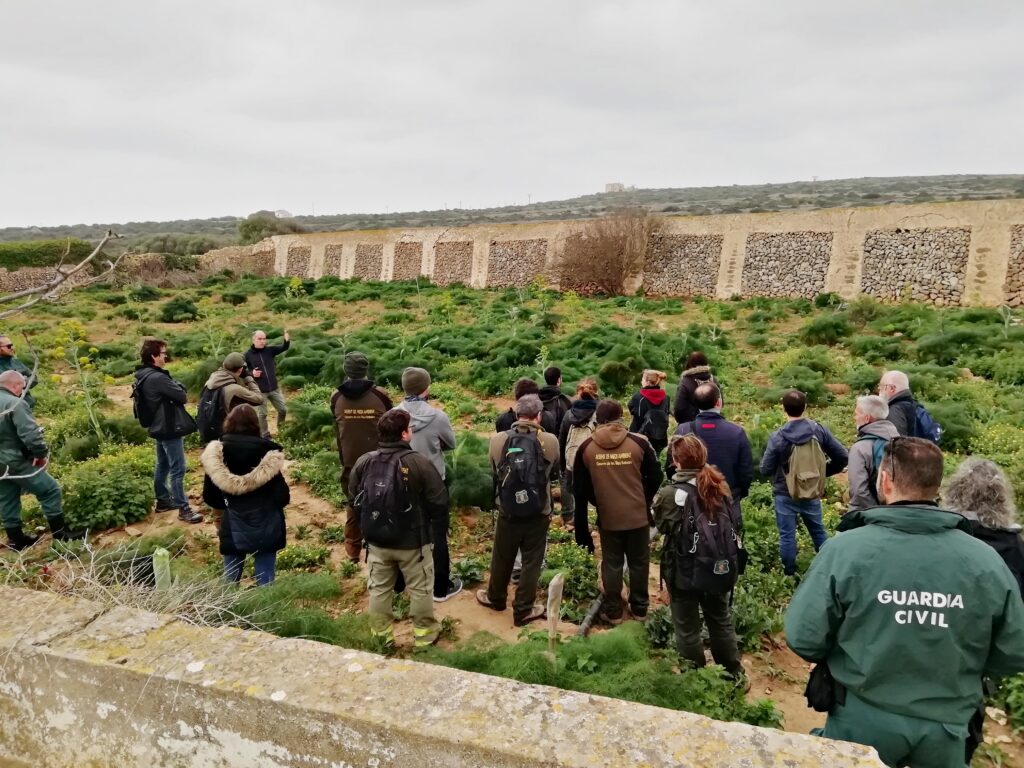
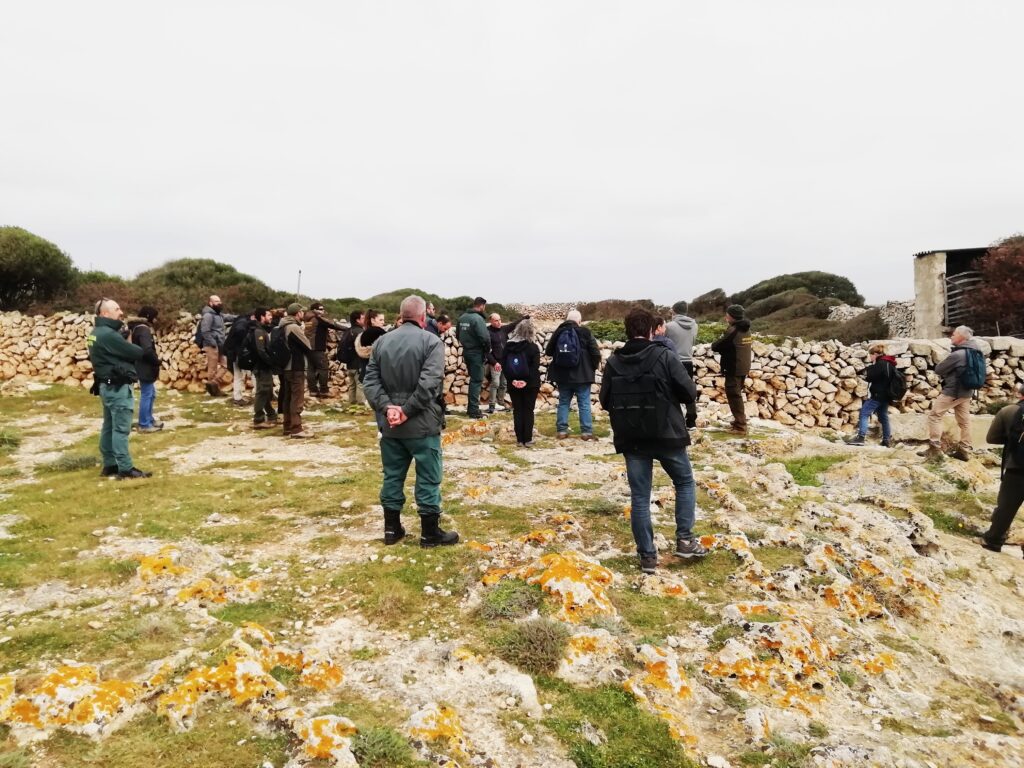
The other two sessions consisted of field trips aimed at identifying and analyzing on-site the main types of ethnographic real estate present in the Menorcan countryside. In this regard, the collaboration of the Torre-saura Foundation was especially relevant, with a visit to the Ses Truqueries estate, one of the most representatives of the former County of Torre-saura. The estate is located in the heart of Punta Nati Cultural Interest Site (BIC), the only space on the island with this level of protection in the category of Ethnological Interest Site, given the high concentration of heritage assets it contains and the way these have historically shaped the landscape.
Ses Truqueries is a paradigmatic example of a great Menorcan estate, both for its size and for the richness and integrity of its traditional elements. The estate preserves some of the best examples of the island’s ethnological heritage, with an exceptional concentration of dry-stone elements —dry stone walls, ponts, monumental barraques, corrals, parats, etc.— a hydraulic system perfectly adapted to the area’s characteristics —with water wheels, pous de torn, and cisterns of different types— as well as an architectural ensemble that allows us to understand the productive and social organization of the Menorcan countryside over the centuries. All these elements create a cultural landscape of great coherence and authenticity, where the dialogue between human activity and the natural environment is fully visible.
This hands-on session, taught by the same instructors, has been also attended by Toni Triay, the farmer of the property, who provided a direct, firsthand perspective on the farm’s current operations. The tour allowed for an on-site viewing of a very complete and representative example of Menorcan rural heritage.
With this collaboration, the Fundación José María de Olives y de Ponsich, Conde de Torre-saura reaffirms its active commitment to the conservation and dissemination of Menorca’s cultural heritage, and especially to the preservation of the historical, ethnological, and landscape values of the former county of Torre-saura, which constitutes a key element of Menorca’s identity and its territorial model as a Biosphere Reserve.