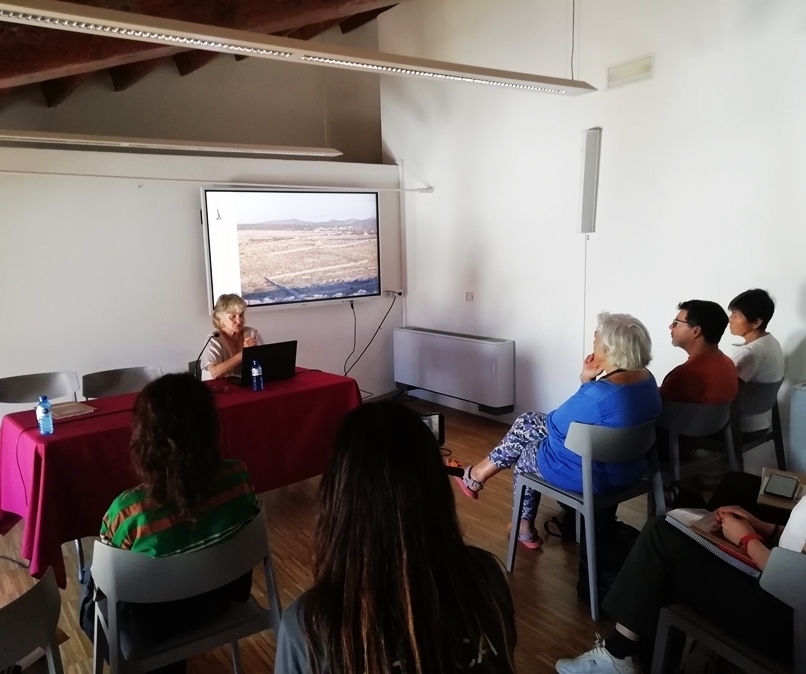
The Fundación José María de Olives y de Ponsich, Conde de Torre-saura participated in the conference “Sharing Identities: Conference on the Interpretation of Cultural Heritage in Menorca,” organized by the Fundació Lithica on May 29th and 30th, as part of the commemoration of the 50th anniversary of the Asociación Hispania Nostra, a leading national organization dedicated to the defense, conservation, and promotion of cultural heritage.
The event, promoted by the Fundació Lithica and Hispania Nostra in collaboration with the Ciutadella City Council, the Consell Insular de Menorca, the Institut d’Estudis Baleàrics, and the Torre-saura Foundation itself, served as an opportunity to reflect on the importance of heritage interpretation as a tool for sharing knowledge, building identity, and strengthening the bond between citizens and their cultural legacy.
On an island with such extraordinary heritage wealth as Menorca, interpretation becomes a fundamental element in giving meaning to historic sites, facilitating their understanding, and ensuring that both residents and visitors can connect with the cultural values they represent. In this sense, the conference served as a space for debate, learning, and the exchange of experiences among some of the leading organizations and professionals involved in heritage management on the island.
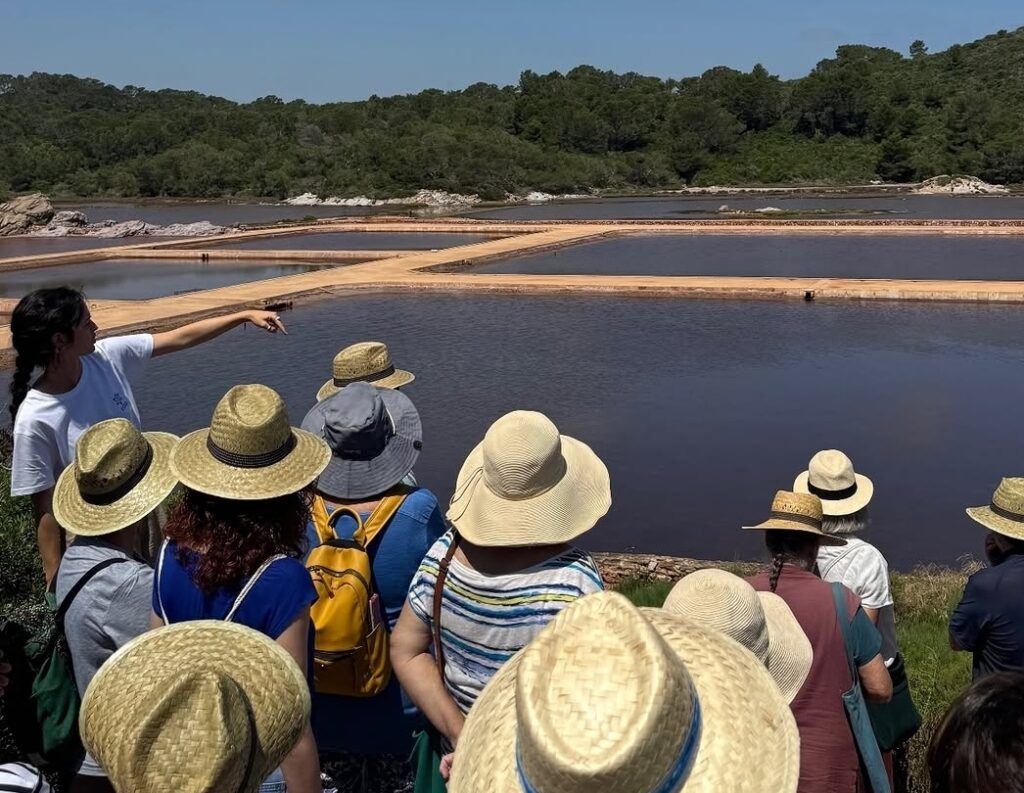
The session on May 29th brought together numerous experts who presented interesting initiatives for heritage restoration and outreach. Marta Jordi, scientific coordinator of the Institut Menorquí d’Estudis, addressed the heritage preservation of Menorca’s technical and industrial legacy, while Bárbara Jordi, historical heritage specialist at the Consell Insular de Menorca, presented the process of creating the Menorca Talayotic Interpretation Center. On another side, Laura Ruiz presented the project to restore and highlight the salt-making heritage at the Salinas de la Concepción in Fornells, and General Luis Alejandre, president of the Fundación Hospital Isla del Rey, shared the volunteer-driven heritage restoration effort that has transformed this complex into a cultural and heritage landmark on the island.
The session also featured a presentation by Anna Bagur, cultural specialist at the Fundació Lithica, who explained the project to create the Sant Esteve Quarry Interpretation Center; by Carmela Sánchez, president of the Societat Històrico-Arqueológica Martí i Bella, who outlined the interpretive potential of the cultural landscape of Punta Nati, the only Site of Cultural Interest in Menorca designated in the category of ethnological site; and Miquel Àngel Marquès, a historical heritage specialist with the Consell Insular de Menorca, who spoke about the future restoration project for Sa Farinera de s’Arangí in Es Mercadal, one of the island’s most unique industrial complexes.
The conference was rounded out by contributions from Aina Ferrero, director of the Museu del Calçat i la Indústria in Inca, and Lourdes Melis, director of the Museu del Teixit i del Brodat in Sant Llorenç des Cardassar and the Mallorca Railway Museum in Son Carrió, who shared experiences and thoughts on heritage interpretation from a museum perspective.
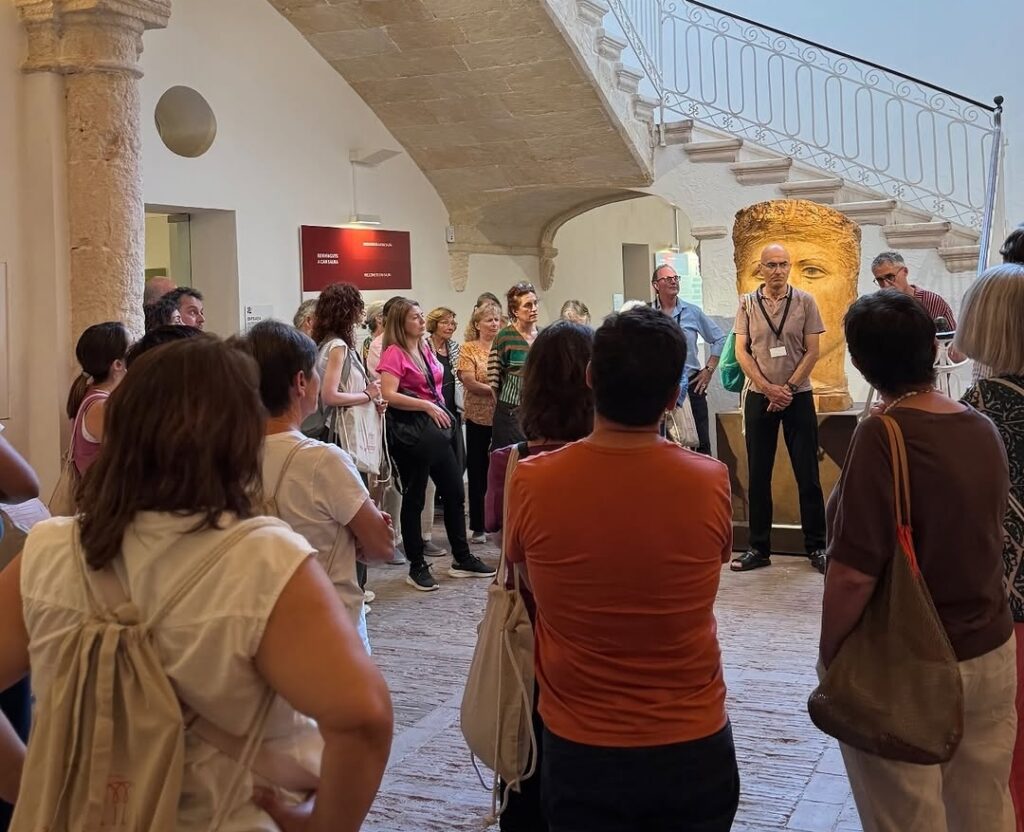
One of the highlights of the event was the guided tour of the Torre-saura County Palace. During the tour, Antoni Camps explained to the participants the work carried out by the Torre-saura Foundation for the restoration, conservation, interpretation, and promotion of this iconic building, as well as the initiatives undertaken to interpret and make the county’s historical legacy accessible to the public.
The visit provided a firsthand look at how heritage interpretation helps breathe life into historic spaces and transform them into tools for knowledge and cultural transmission.
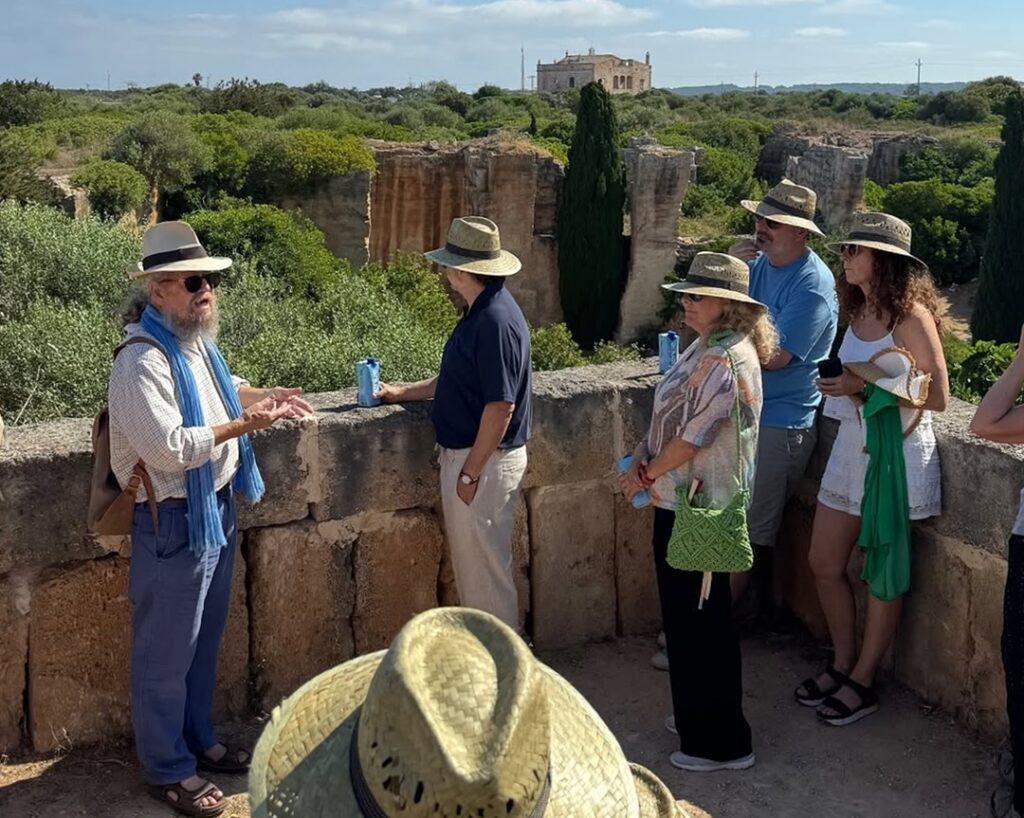
Saturday May 30th was dedicated to exploring other heritage restoration projects on-site, with visits to the s’Hostal quarries, the Fornells salt flats, and Isla del Rey.
These sessions have highlighted the importance of creating spaces for professionals, institutions, and organizations involved in the conservation, management, and promotion of cultural heritage to come together. Beyond the presentations and technical visits, the initiative has allowed for the sharing of experiences, the comparison of perspectives, and the establishment of new avenues for collaboration among projects that, despite their specific characteristics, share common challenges and objectives. In a context marked by new challenges in heritage management and preservation, the creation of cooperation networks and the exchange of knowledge become fundamental tools for enriching heritage management practices, promoting new initiatives, and moving toward a more rigorous, accessible, and socially connected interpretation of heritage.
Toni Camps. Photographs by Toni Camps and Fundació Lithica