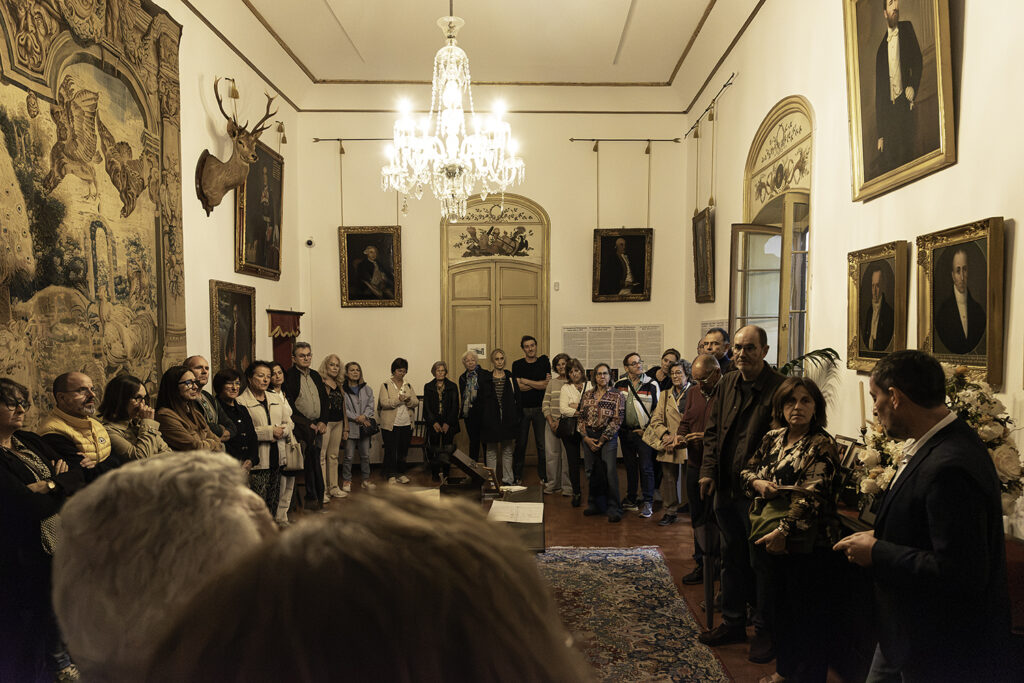
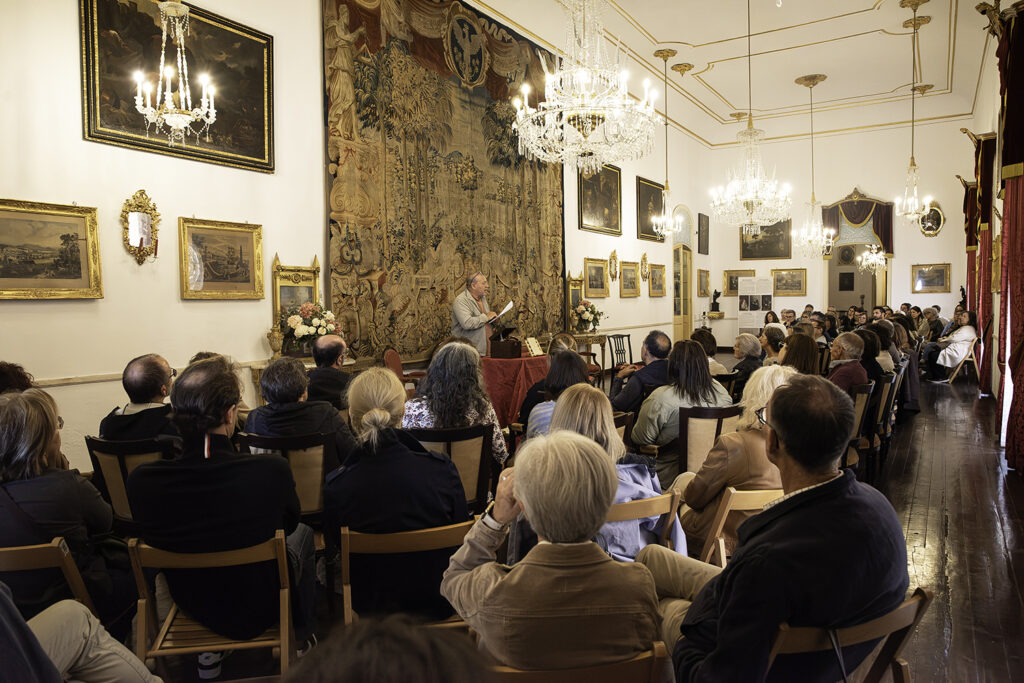
On Sunday, November 8, the Torre-saura Palace hosted the first day of Tast de Cultura 2026, an initiative of the Ciutadella City Council that promotes local culture and heritage through history, the performing arts, and gastronomy.
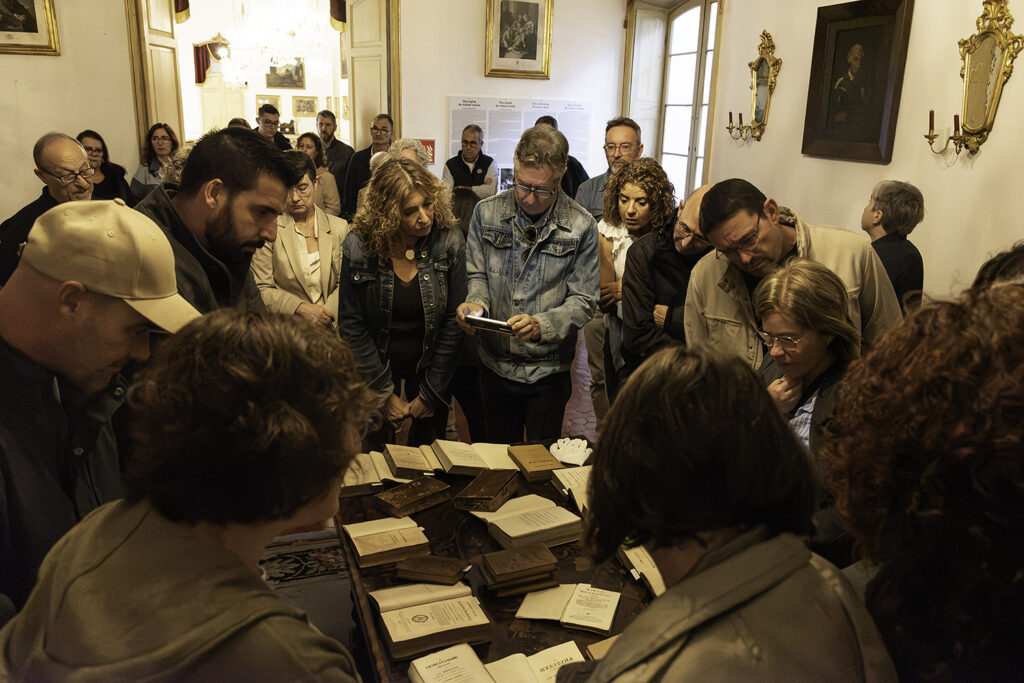
Under the title “The Book of Remedies of Torre-saura,” the event offered a journey through the history of health and medicine based on the documentary and material heritage preserved in the palace. The first part consisted of a guided tour led by the company Talaia Cultura, which showcased books, documents, and objects linked to medical practices from past eras. Among these were a manuscript of folk medicine remedies, an antique wooden medicine cabinet, various 18th and 19th centuries treatises on medicine, surgery, and pharmacy from the palace’s library, as well as medicines and healthcare products from the late 19th and 20th centuries.
Marc Moll then delved into the contents of the manuscript, which includes remedies for people and animals, as well as preparations for domestic use, and explained their ingredients and the folk knowledge behind them. Together, the documents and objects allow us to trace the evolution of medicine and the coexistence of traditional remedies, the medical knowledge of the time, and the emergence of industrial pharmaceutical products. However, its value extends beyond its historical interest: this is not a collection assembled for display, but rather a heritage preserved in the very place where it has been part of the life of the house. Each object responds to a specific need and moment in time, and it is precisely this connection to its original context that gives it special significance.
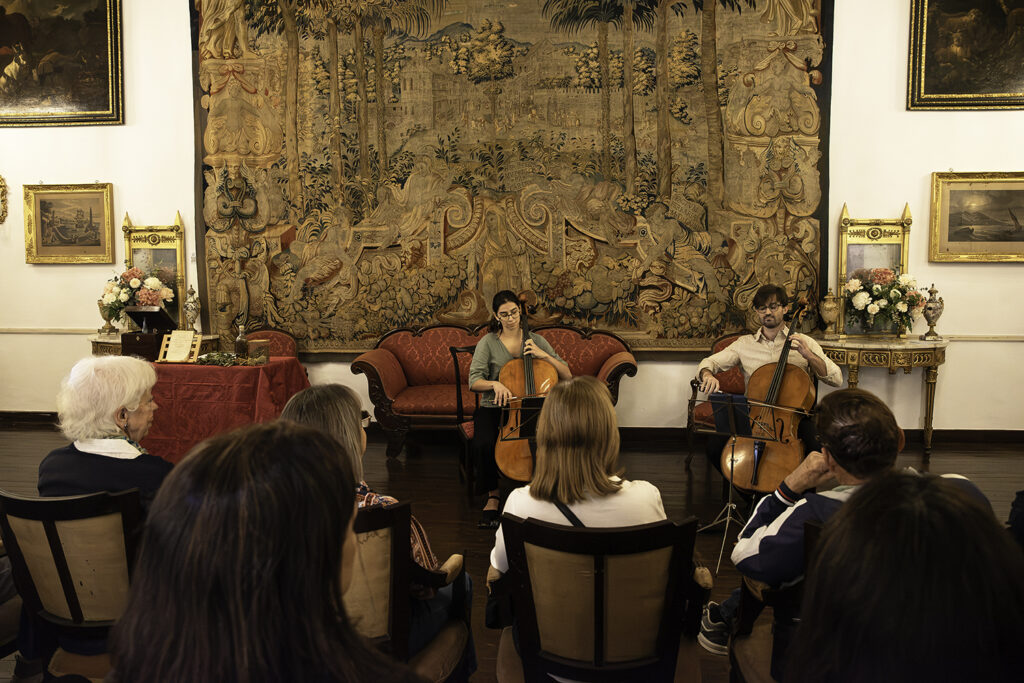
The event continued with a concert for two cellos performed by Pau Marquès Oleo and Núria Pons Orfila. The repertoire included pieces from what is known as the Quadern de Ciutadella, preserved in the Historical Archive of Ciutadella, and other compositions by composers associated with court music, some of whom are also represented in the palace’s music archive. The musical program thus established a dialogue between Ciutadella’s documentary heritage and the historical collections of the palace of Torre-saura.
To conclude, chef Joan Caballo and Sa Cooperativa del Camp de Menorca offered a gastronomic tasting inspired by folk traditions linked to health and recovery. The menu featured a beef and chicken broth with thyme and marjoram, traditionally associated with convalescence; “midwife’s soups,” which were offered to women after childbirth to help them regain their strength; and San Blas rolls with liquorice, linked to the tradition of blessing them on February 3 to protect against throat ailments.
For the Torre-saura Foundation, participating in this initiative has been an opportunity to share the palace’s history and its documentary and material heritage, while also reaffirming its commitment to collaborating with the local government in organizing activities that help promote Ciutadella’s historical and cultural heritage and make it more accessible to the public.
Toni Camps. Photographs by Sonia Rotger Caules – Talaia Cultura S.L.