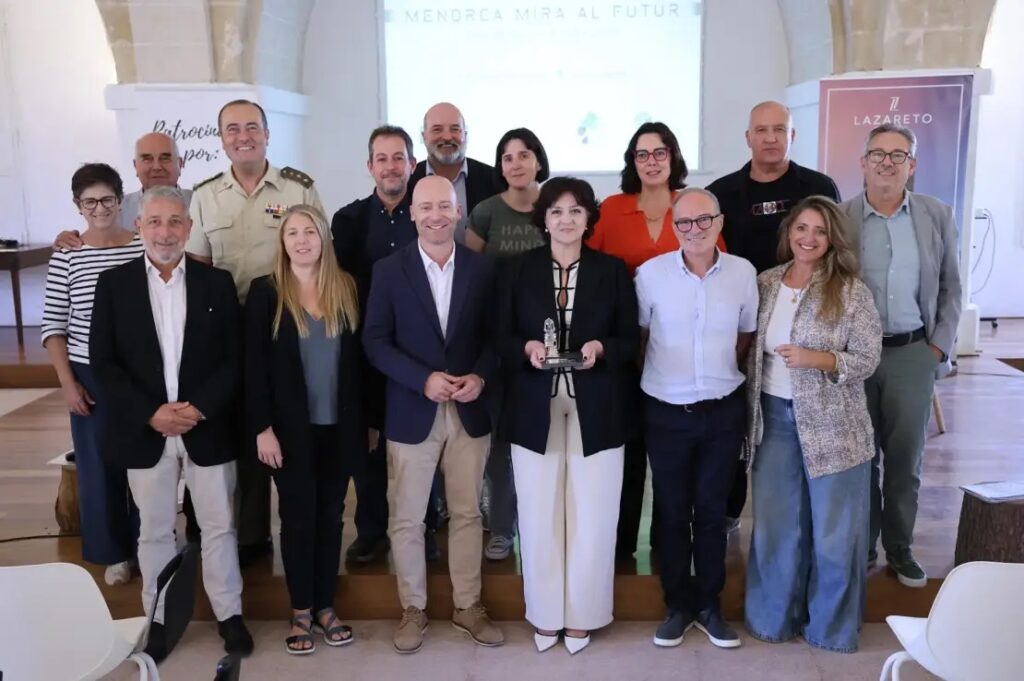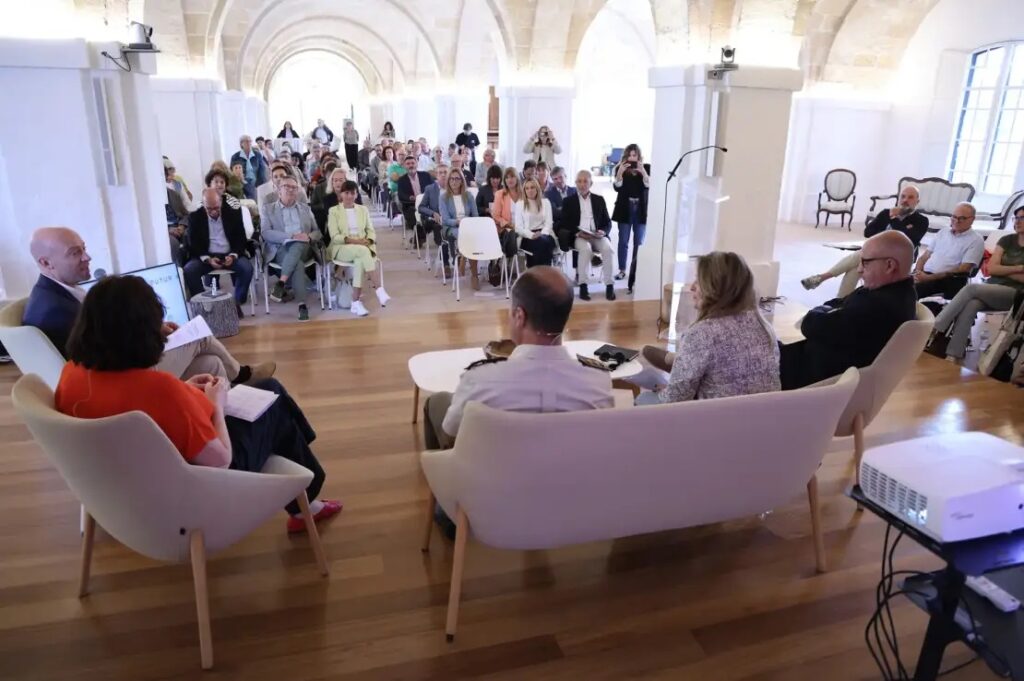
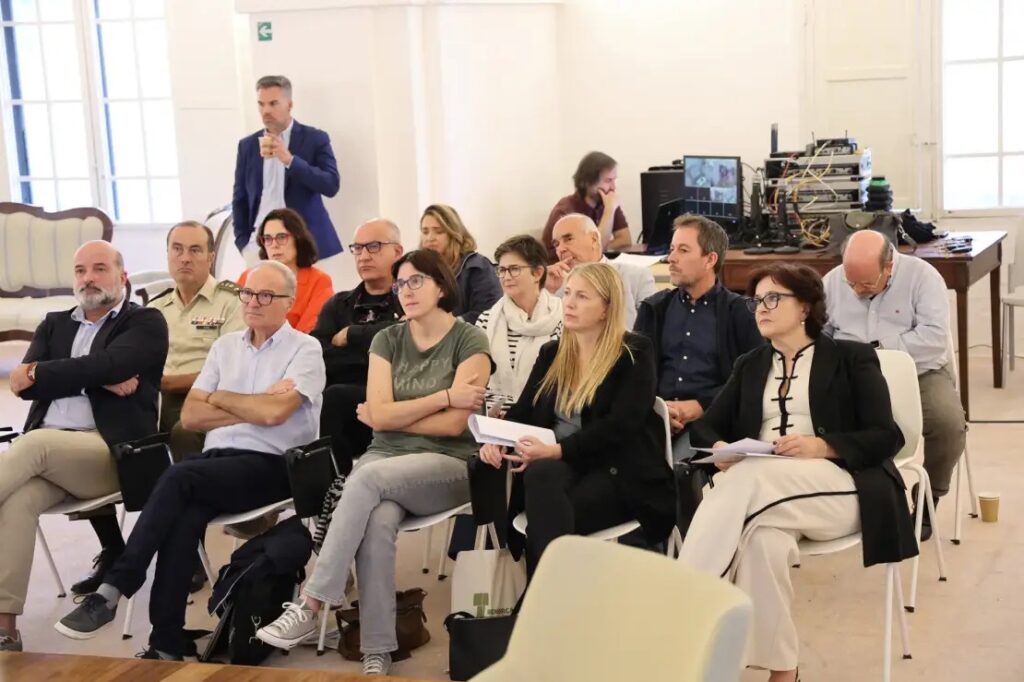
The need to preserve historical heritage, make it accessible, and integrate it into Menorca’s cultural and tourist life was the focus yesterday of the Second Menorca Looks to the Future Forum, held at the Llatzeret in Maó with more than a hundred attendees. Organized by Es Diari and the Fundació Foment del Turisme de Menorca, the forum brought together specialists and representatives from various heritage sites to share experiences and discuss the challenges of conservation, management, and outreach.
Among the participants were María del Pozo, director of the Aranjuez Cultural Landscape Foundation; Luis Alejandre, a driving force behind the restoration of Isla del Rey; Anna Maria Bagur, director of culture at the Fundació Lithica; Rafael Durán, manager of the La Mola and Binissuès fortresses; Bàrbara Jordi Petrus, a historical heritage specialist; Victòria Cantarellas, an archaeologist with the Consell Insular; and Antoni Camps Extremera, administrator of Talaia Cultura SL. The roundtable featured Carolina Desel, director of the Menorca Museum; Colonel Antonio Rojas, president of the Menorca Historical-Military Heritage Consortium; architect Fernando Pons Vidal; and Àngela Vallés, cultural management specialist at the Llatzeret. The president of the Consell Insular de Menorca, Adolfo Vilafranca, also spoke.
Cas Comte: A conservation and outreach project
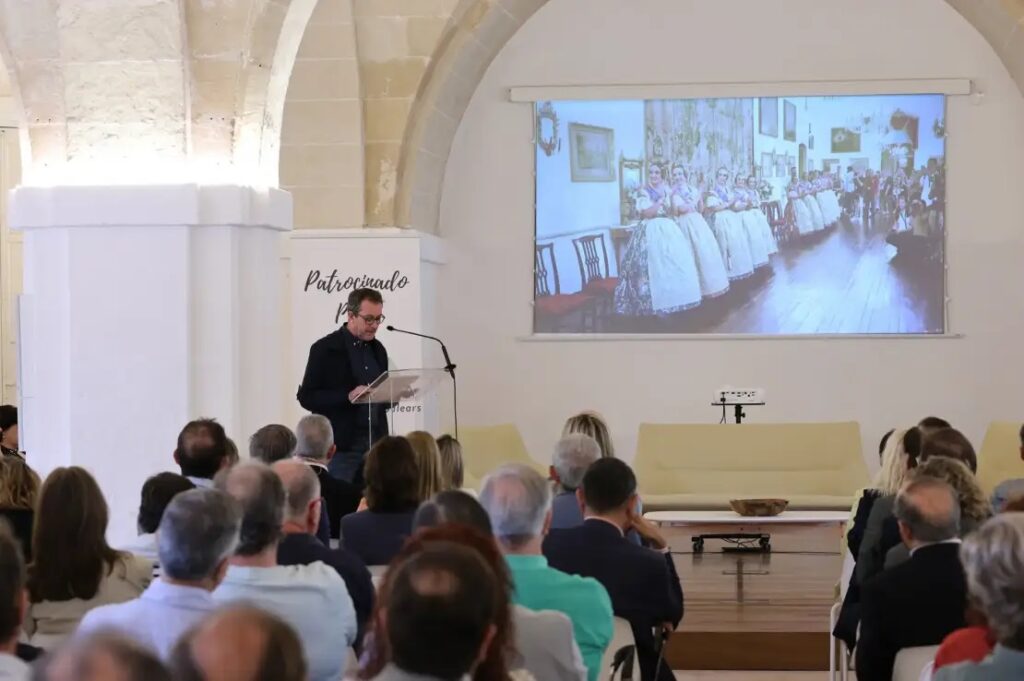
In his remarks, Antoni Camps discussed the management of the palace of the Counts of Torre-saura, known as Cas Comte, one of Ciutadella’s most notable historic residences.
The project began in 2021 with the restoration and organization of the house’s documentary archive. Subsequently, the property’s owners initiated its opening to the public in collaboration with Talaia Cultura SL, following a process of research, conservation, adaptation, and interpretation of the spaces. The first pilot tours took place in the summer of 2022, and since then, the tour route has been progressively expanded. Currently, visitors can explore approximately 60 to 70 percent of the building, which spans nearly 6,000 square meters and comprises almost a hundred rooms. The museum’s development continues, with the goal of gradually incorporating new spaces and content.
Camps particularly highlighted the involvement of the Fundación José María de Olives y de Ponsich, Conde de Torre-saura, which has made it possible to make progress both in the documentary recovery and in the opening and adaptation of the palace. The Foundation recognizes that preserving this legacy requires not only maintaining the building but also giving it a cultural purpose and conveying its history to society.
The challenge of integrating heritage into the tourist experience
One of the most significant points raised during the presentation was the difficulty of attracting visitors to heritage sites during the peak tourist months. According to data presented by Camps, Cas Comte sees fewer visitors in July and August, while demand increases in September and October.
This reality invites reflection on a tourism model that is overly associated with sun and beach, as well as on the need to give greater visibility to cultural offerings. Heritage can help diversify visitors’ experiences and promote seasonality, but it is necessary to generate interest, explain its value, and facilitate its inclusion in tourist itineraries. Camps also pointed out the scarcity of private initiatives dedicated to opening historic sites to the public and advocated for a shared strategy between government agencies and businesses to strengthen the role of culture in Menorca’s tourism offerings.
Conclusions: preserve to share
The forum highlighted that heritage protection requires planning, resources, continuity, and social engagement. The experiences presented—ranging from Isla del Rey and the S’Hostal quarries to Talaiotic Menorca, the La Mola fortress, and Cas Comte—demonstrate the diversity of the island’s heritage and the various approaches to preserving and promoting it.
In this context, the experience of the Palace of the Counts of Torre-saura exemplifies how collaboration between the property owners and professional management can transform a historic residence into a space for cultural outreach.
The Torre-saura Foundation thus reaffirms its commitment to the conservation and transmission of this legacy, with the aim of ensuring that the palace continues to contribute to residents’ and visitors’ understanding of the history of Ciutadella and Menorca.
Antoni Camps. Photographs by Gemma Andreu – Diari Menorca